Jianjing Dynamics | Embracing Accessibility: Chairman Huang Zhiting of Jianjing Consulting Attends the Themed Open Day of the National Accessible Envi
September 24, 2025, 10:59:00
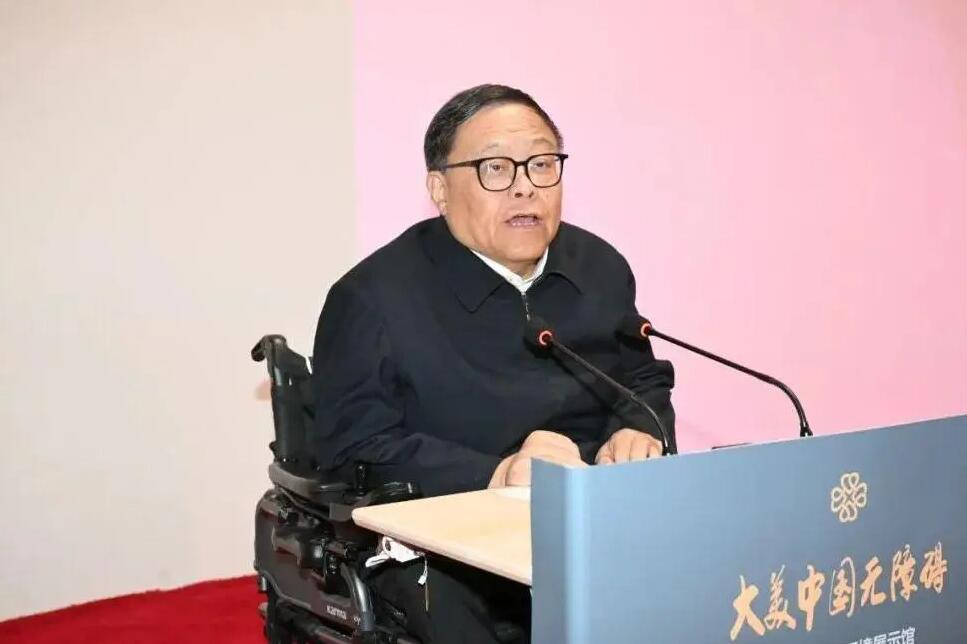
Accessibility facility construction is a symbol of a country’s and society’s civilization, and its development has always been a key focus of social progress. Recently, the National Accessible Environment Exhibition Hall held a themed open day event titled "Guiding Accessibility with Commitment, Benefiting Generations through Legislation". Nearly 200 representatives from industry associations, government departments, research institutions, social organizations, and media gathered to discuss the high-quality development of accessibility initiatives. Huang Zhiting, Chairman of Jianjing Investment Consulting Co., Ltd. (hereinafter referred to as "Jianjing Consulting"), was invited to attend and deliver a keynote speech, systematically explaining the supporting value and implementation paths of professional consulting services for the high-quality development of the accessibility cause.

In his opening speech, Mr. Lü Shiming, Chairman of the China Disabled Volunteers Association, reviewed the five-year development journey of China’s accessibility environment construction. He emphasized that over the past five years, accessibility environment construction has evolved from a practical people’s livelihood initiative to a key priority integrated into the national "14th Five-Year Plan" for national economic development. It has been incorporated into government work reports and translated into national standards by the Ministry of Housing and Urban-Rural Development, information technology standards by the Ministry of Industry and Information Technology, and travel security guidelines by the Ministry of Transport. It has also been included in the supervision scope of "public interest litigation" by the Supreme People’s Procuratorate and the quality certification system of the State Administration for Market Regulation, advancing steadily toward high-quality development goals.
The second anniversary of the implementation of the Law of the People’s Republic of China on Accessible Environment Construction marks China’s entry into a law-based phase of accessibility construction with clear rules to follow. At the national top-level design level, age-friendly, child-friendly, and accessibility features have been identified as core livability criteria for urban renewal. Barrier-free facilities have become a standard configuration in the renovation of old residential communities, and accessibility environment is a prerequisite for meeting the standards of "high-quality housing, communities, and urban areas". These efforts ultimately translate into tangible happiness for the people. The remarkable changes in the accessibility field and the increased well-being of the public over the past five years are vivid evidence of the transformation of guiding principles into practical actions, and a powerful demonstration of human rights protection in the process of modernization.
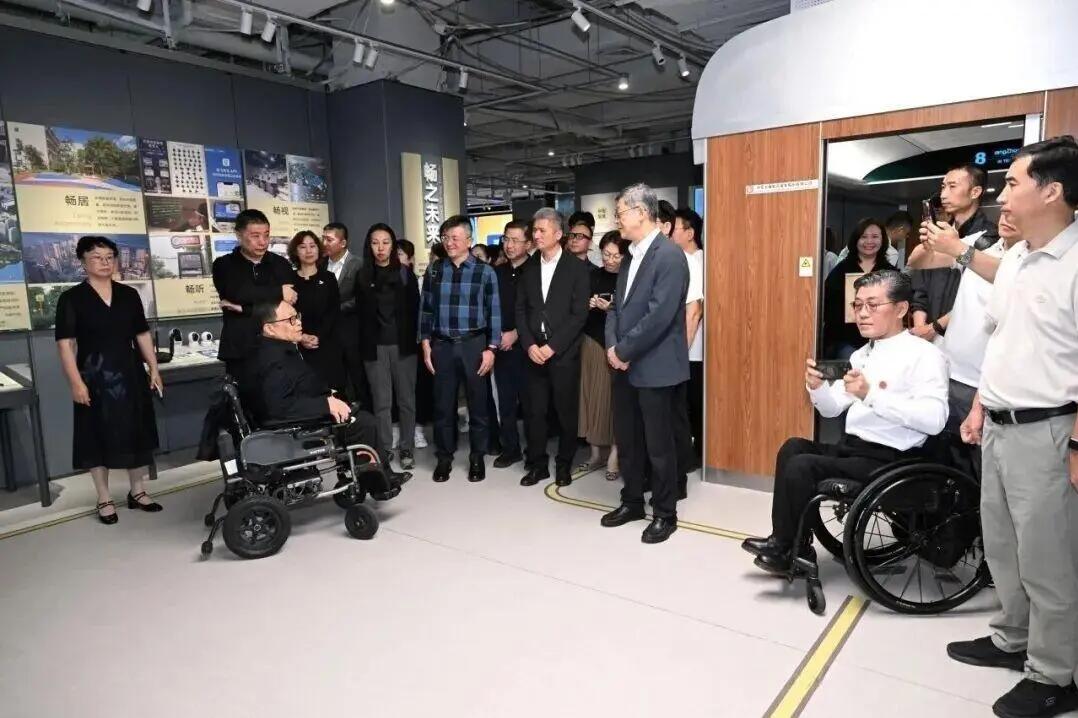
Led by Curator Zhao Xing, the guests had an immersive experience at the National Accessible Environment Exhibition Hall, where every exhibit carries the footprint of the accessibility cause’s development.
In the exhibition cabinet, the national flag raised at Tiananmen Square on June 28, 2023—the day the Law on Accessible Environment Construction was promulgated—witnesses the milestone moment of legal protection for accessibility. A "tall and upright" legal calligraphy sculpture artistically interprets the core concepts of "equality, integration, and sharing". The "Accessible Excellent Design" wall systematically showcases the achievements of accessibility renovations from public buildings to community spaces.
The full-scale model of the accessible carriage of the "Fuxing" high-speed train includes detailed features such as widened aisles, adjustable wheelchair seats, and emergency call systems, intuitively demonstrating breakthroughs in accessibility for transportation. The renovated accessible restroom prototype, with humanized designs like non-slip floors, foldable handrails, and voice-controlled devices, highlights the precise response to the daily needs of people with disabilities. During the visit, the guests deeply felt that accessible facilities have shifted from "supplementary configurations" to "basic guarantees" and evolved from "facility construction" to "rights realization".
In the "Pioneering Leadership" session, several industry leaders delivered keynote speeches focusing on the practice and exploration of accessibility environment construction, providing in-depth insights and path references:
- Mr. Xiu Long, Chairman of the Architectural Society of China, delivered a speech titled Ideals, Passions, Civilization, and Progress. Combining the society’s industry heritage and practical experience, he elaborated on the responsibility and commitment of the construction sector in implementing accessibility concepts.
- Mr. Shi Xiaodong, Member of the Party Group of Beijing Municipal Commission of Planning and Natural Resources, focused on Beijing’s development practices. In his speech Learning the Spirit of the Central Urban Work Conference to Promote High-Quality Development of the Capital, he emphasized the goal of "making people’s lives in the city more convenient, comfortable, and better".
- Mr. Yin Huakai, Secretary of the Party Group and Director of Hunan Disabled Persons’ Federation, delivered a speech titled Witnessing China’s Progress through Hunan’s Changes—Five Years of Accessibility Environment Construction in Hunan. He reviewed the profound impact of local development practices on accessibility advancement.
- Mr. Ji Xiangde, President of Social Sciences Academic Press, introduced the publishing value of the accessibility blue book from the perspective of knowledge dissemination and think tank support.
These speeches integrated guiding principles with practical work from four dimensions—industry leadership, urban practice, local exploration, and intellectual support—showcasing achievements in accessibility construction at different levels and providing diverse ideas for coordinated high-quality industry development.
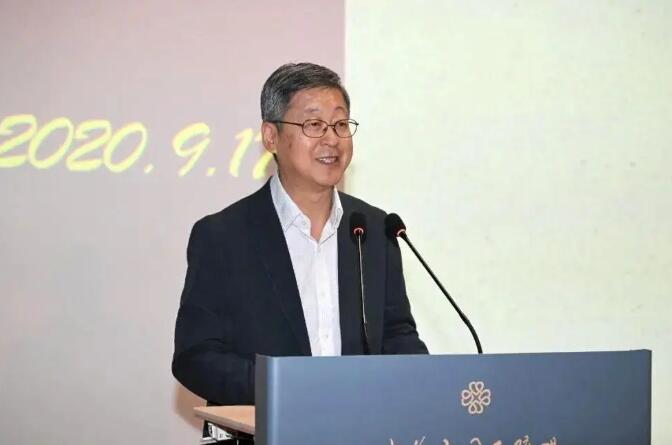
The "Achievement Showcase" session focused on presenting landmark achievements in China’s accessibility environment construction over the past five years, covering legal implementation, international communication, physical exhibition halls, and digital innovation, fully demonstrating the practical progress of the "equality, integration, and sharing" concept:
- Ms. Luo Yan, Deputy Secretary-General of the China Disabled Volunteers Association, promoted the National Accessible Environment Exhibition Hall Report, using detailed data and cases to demonstrate the hall’s achievements one year after its opening.
- Ms. Wang Li, Deputy Secretary-General of the Association, released the Report on China’s Accessibility Achievements Debuting at the Palace of Nations in Geneva, UN, revisiting the highlight moment when the hall’s outstanding achievements were showcased on the international stage through photos and videos.
- Mr. Ling Kang, Editor-in-Chief of the Accessibility Environment Blue Book: China’s Accessibility Environment Development Report (2023-2024), introduced the book’s core content. He noted that the blue book systematically analyzes the current status, challenges, and trends of China’s accessibility environment construction through multi-dimensional data and typical cases, providing scientific references for policy-making and practice.
- Ms. Zhu Hong, Chair of Accenture Greater China, and Ms. Pan Yunfei, Head of Disability-Inclusion, launched the National Accessible Environment Exhibition Hall Cloud Exhibition (AR3D + Sign Language) on-site. The cloud exhibition uses AR3D technology to create an immersive virtual scene with sign language virtual anchors, breaking time and space barriers to achieve "shared accessibility achievements for all".
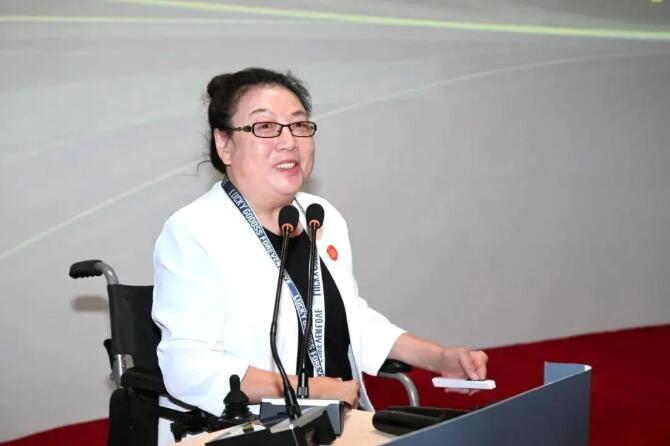
As the core session of the event, the "Achievement Sharing" session showcased 26 outstanding accessibility construction achievements across 16 categories. Among them, the keynote speech Accessible Consulting Promoting High-Quality Development of Accessible Environment Construction by Huang Zhiting, Chairman of Jianjing Consulting, attracted wide attention and in-depth discussion with its accurate insight into industry pain points and practical solutions.
Before the speech, a 60.28-meter-long calligraphy scroll of the Law on Accessible Environment Construction created by renowned calligrapher Mr. Du Benji was displayed. The length "60.28 meters" corresponds to the law’s promulgation date (June 28, 2023), and the scroll contains the full 7,048-character text of the law. Created by Mr. Du over three days in intense summer heat, this scroll—once exhibited at the Palace of Nations in Geneva—integrates the spirit of the rule of law, calligraphy art, and human rights concepts. The guests expressed their respect with warm applause, and Curator Zhao Xing presented Mr. Du with a collection certificate for the hall.
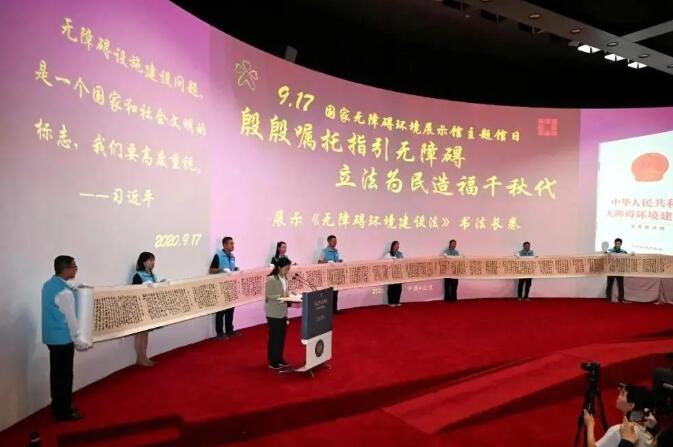
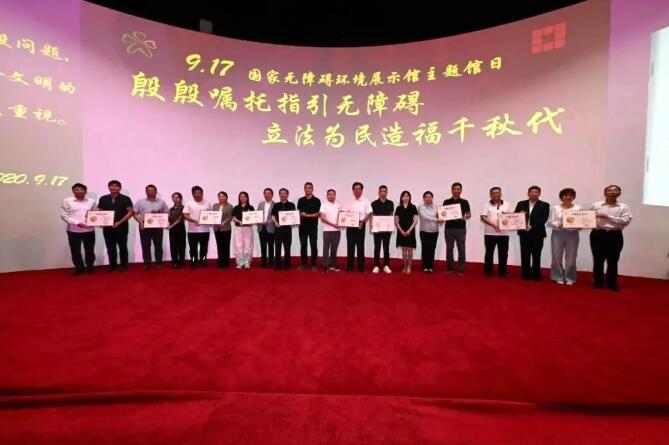
Subsequently, the Accessibility Think Tank released the latest national "Top 10 Accessible Excellent Designs", covering public buildings, community services, and medical facilities, including:
- Accessible special design of Beijing Future Architecture Technology Innovation Center
- Renovation project of Building 3 West Wing, Erqi Theater Road, Beijing
- National Accessible Environment Exhibition Hall at Beijing Planning Exhibition Hall
- Hangzhou Danafu Accessible Experience Service Center
- Office Area of Hunan Disabled Persons’ Federation
- Yancheng Disabled Persons’ Federation (De’ai Building)
- Chongqing Cummins Office Building
- Second Floor of Emergency Building A, East Campus of Peking Union Medical College Hospital
- Youth Community Party and Mass Service Center, Shishan Hengtang Sub-district, Suzhou High-Tech Zone
- Accessible Renovation of Gudang Street Farmer’s Market, Xihu District, Hangzhou
Chairman Huang Zhiting pointed out that accessible environment construction is of great significance in the process of modernization. It not only aligns with the requirement of "covering all groups and the entire life cycle" for health protection proposed in the Healthy China 2030 Plan but also serves as a core measure to improve social quality and promote the social participation of special groups. With the acceleration of population aging, the shift of the accessibility cause from "having facilities" to "having quality facilities", and the transformation of urban construction from incremental expansion to stock improvement, traditional experience can no longer meet the needs of refined and humanized development, making professional consulting services an inevitable choice.
He further explained that accessible consulting is a professional intellectual service throughout the entire life cycle of construction projects, covering pre-research, design, construction, completion acceptance, and operation and maintenance from a full-life-cycle perspective. Through professional solutions for problem-solving and planning, it provides systematic support for accessibility construction. Unlike simple compliance reviews, professional consulting emphasizes demand adaptation—it not only meets standards and regulations but also aligns with the actual needs of people with disabilities, the elderly, and other groups.
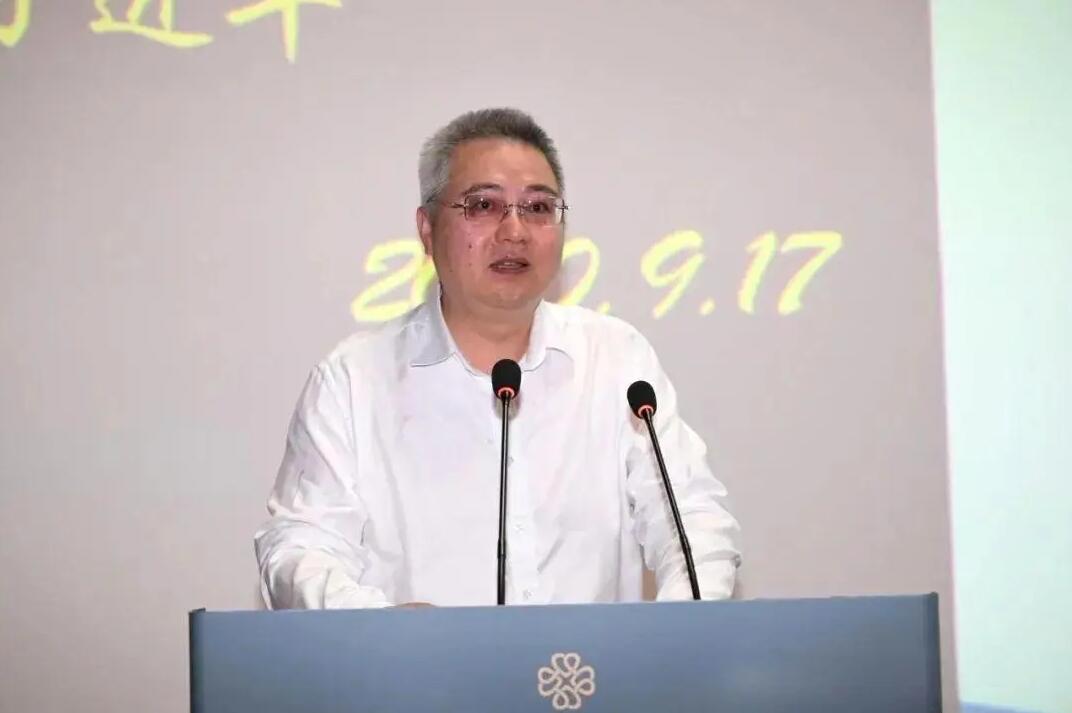
Combining Jianjing Consulting’s practices, Chairman Huang Zhiting proposed a full-life-cycle consulting path of "front-end guidance → process optimization → back-end evaluation", emphasizing that professional services run through the entire project chain:
In the front-end guidance phase, consulting services intervene early in the pre-planning stage:
- Integrate accessibility requirements into project feasibility studies to determine construction standards and investment estimates;
- Conduct regional accessibility special planning consulting to ensure coordination between local construction and the overall urban development plan;
- Provide consulting for the preparation of design briefs to clarify technical standards and implementation requirements for accessible design, avoiding later rectification and resource waste from the source.
The process optimization phase focuses on standardized and humanized implementation:
- In the design phase, organize people with disabilities and the elderly to participate in on-site experience, simulate scenarios such as the walking paths of visually impaired individuals, identify and resolve systemic issues (e.g., missing guidance signs, unreasonable facility layout), and propose compliant and practical optimization plans based on standards;
- In the construction phase, provide technical guidance and full-process quality supervision to help construction units accurately understand design intentions, address technical difficulties and design changes, and ensure the effective implementation of accessibility requirements.
The back-end evaluation phase establishes a PDCA closed-loop management of "construction → feedback → iteration":
- Through Post-Occupancy Evaluation (POE), combine user interviews, questionnaires, and on-site observations to gain in-depth insights into the actual experiences and pain points of users;
- Quantitatively analyze satisfaction and demand preferences to provide scientific basis for continuous project optimization, standard revision, and certification rating.Chairman Huang emphasized that accessibility construction is not a one-time project; continuous iteration is the key to high-quality development.
Regarding industry innovation, Chairman Huang Zhiting highlighted three key directions:
- Digital Transformation: Reshape consulting models using new technologies such as BIM, VR/AR, and artificial intelligence. BIM technology can build accessible information models for design review and conflict detection in a virtual environment; VR/AR technology can simulate first-person experiences of people with different disabilities to identify design flaws in advance and reduce trial-and-error costs.
- Standardization Construction: Promote a multi-level system combining national standards, industry standards, local standards, association standards, and corporate standards to fill gaps and raise technical thresholds.
- Professional Talent Cultivation: Cultivate interdisciplinary talents with both technical expertise and an understanding of user needs through university courses, on-the-job training, and the establishment of expert think tanks.
For industry development, he proposed three suggestions:
- Improve the Legal and Policy System: Clarify the legal status of accessible consulting, establish a registered consultant system, and develop qualification grading and credit evaluation systems to standardize market order.
- Cultivate the Professional Consulting Market: Mandate the procurement of special accessible consulting services for government-invested public projects, establish pilot demonstration cities with financial subsidies, and promote the economic and social value of consulting services through outstanding case studies.
- Strengthen Industry Self-Regulation and International Cooperation: Advocate for the establishment of a national industry organization to develop service standards and professional ethics; learn from international advanced experience to enhance the internationalization level of China’s consulting services.
"With intelligence as the fulcrum, professional consulting integrates legal, technical, humanistic, and economic elements to promote accessible environments from 'physical coverage' to 'effective services', ultimately realizing the vision of equal social participation for all," said Chairman Huang. His speech was met with warm applause for its systematic approach and practical insights, providing important references for industry development.
After the speech, Director Xu Bin presented a gratitude plaque to Jianjing Consulting in recognition of its contributions to the accessibility cause.


 EN
EN