1. A Gathering for Progress: CIXPO Launches a New Chapter in Building Livable Cities
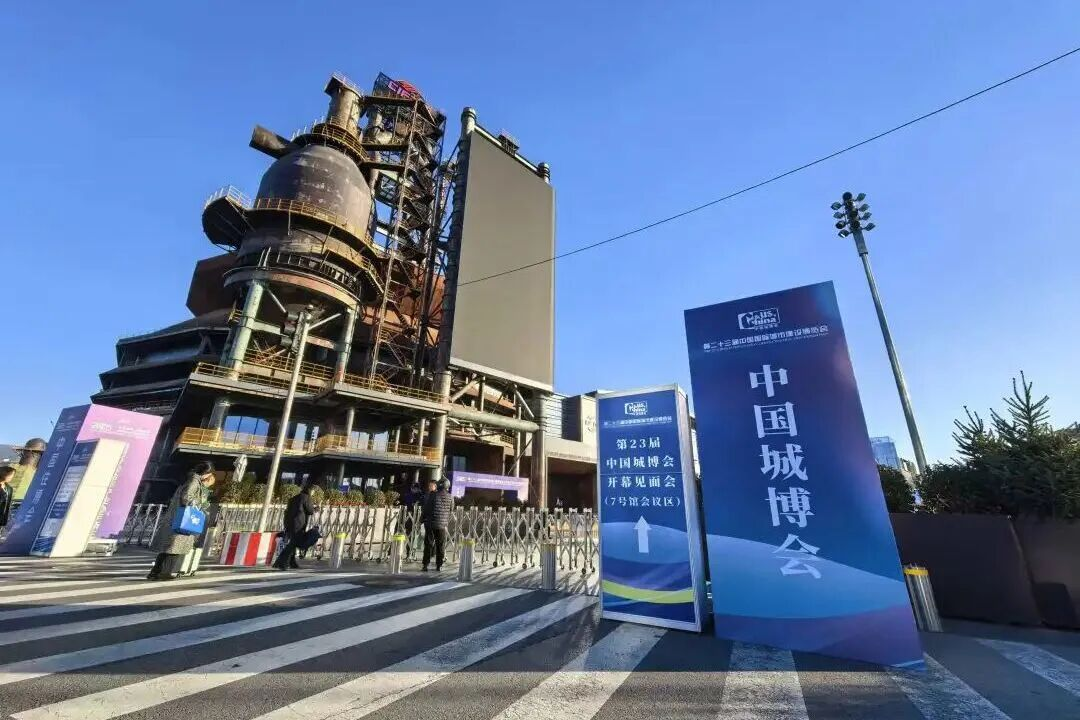
The recent City Expo (CIXPO) was grandly held at the Beijing Shougang International Convention and Exhibition Center. Organized by the China Architectural Culture Center, this edition of the expo centered on the theme "People's Cities, Happy Homes – Building Modern, People-Oriented Cities that are Innovative, Livable, Beautiful, Resilient, Cultivated, and Smart." Spanning nearly 10,000 square meters, the exhibition attracted over a hundred participating enterprises and received nearly 30,000 professional visitors.
As a benchmark event in the industry, CIXPO closely aligned with the guiding principles of the Central Urban Work Conference and the key priorities of the Ministry of Housing and Urban-Rural Development. It featured three core exhibitions: the National Urban Physical Examination Achievements Exhibition, the National Barrier-Free Environment Construction and Aging-Adapted Renovation Special Exhibition, and the Characteristic Industry Exhibition of Counties and Districts Designated for Assistance and Paired Support by the Ministry. The Barrier-Free and Aging-Adapted Renovation Exhibition, under its theme "Barrier-Free • Aging-Adapted • New Vision – Empowering All-Ages Friendly City Development," showcased innovative outcomes from regions including Shandong, Zhejiang, Hubei, Guangdong, and Fujian, as well as from various enterprises. It promoted barrier-free legislation and standards, and presented comprehensive technical solutions spanning from planning and design to construction and operation, thereby establishing a vital platform for industry exchange and collaboration.
This year's CIXPO further leveraged innovative display formats such as XR, MR large-space technology, and interactive sand tables to build a comprehensive ecosystem for industry dialogue. These efforts injected strong momentum into building consensus and clarifying pathways in the field of barrier-free environment development. During the concurrent Ninth Huaxia Urban Industry Chain Development Conference and 2025 High-Quality Urban Development Forum – Urban Renewal and Barrier-Free, Aging-Adapted Renovation Session, participating experts shared in-depth insights focused on the critical topic of barrier-free environment construction.
2. Keynote Address: Establishing a Legal Foundation for Accessibility, Weaving a Tapestry of Shared Well-being
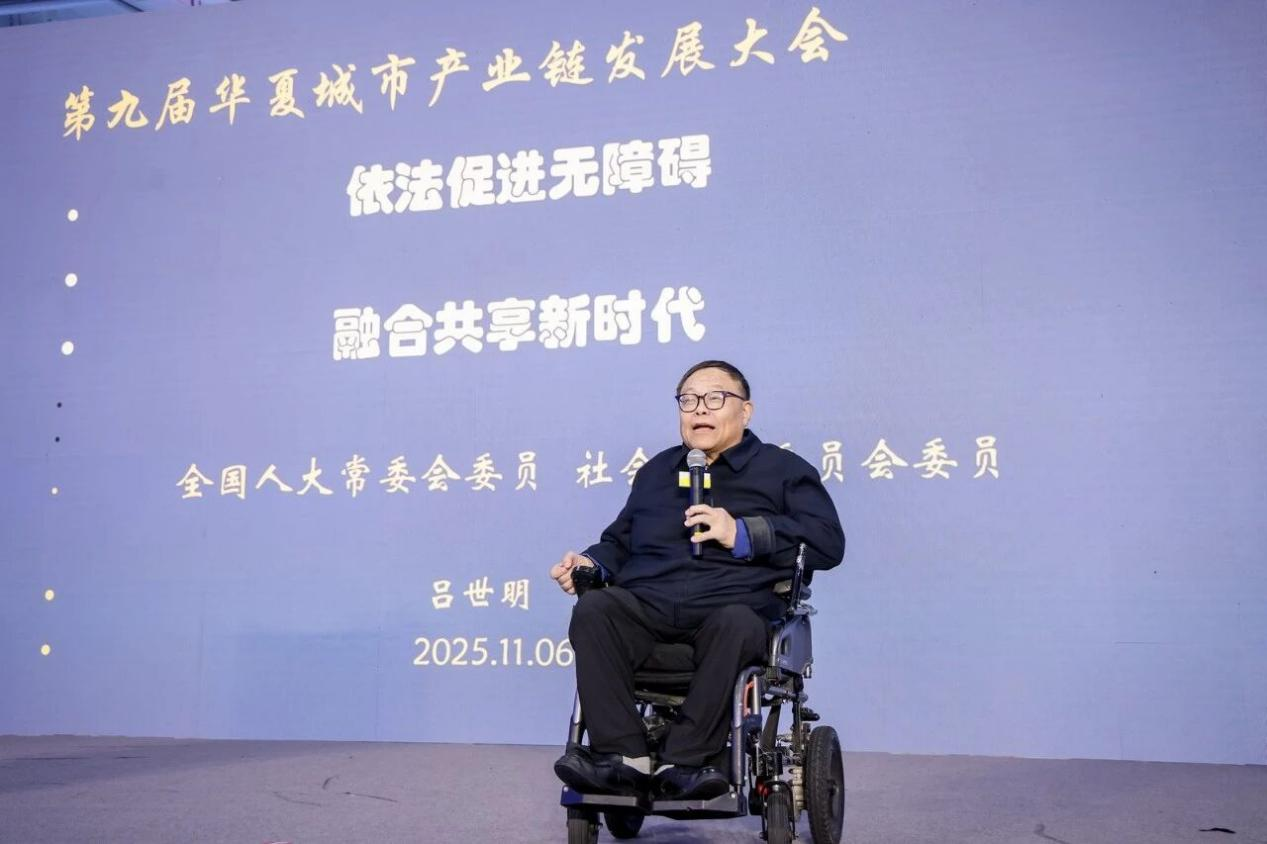
At the conference, Mr. Lü Shiming, President of the China Association of Volunteers for Persons with Disabilities, delivered a keynote speech centered on the theme "Promoting Accessibility by Law, Sharing an Inclusive New Era." He provided a systematic overview of the progress, challenges, and future direction of barrier-free environment development in China.
Mr. Lü emphasized that building a barrier-free environment impacts the quality of life for hundreds of millions. It serves not only the approximately 85 million persons with disabilities and 310 million elderly individuals but also benefits children, pregnant women, and all members of society, representing a broad and urgent societal need. He fully acknowledged the advancements made during the 14th Five-Year Plan period across multiple areas, including legislation on accessibility, industry standards, and procuratorial public interest litigation. He particularly highlighted that the "Barrier-Free Environment Construction Law," starting from a specific focus, demonstrates immense value and lays a solid foundation for advancing Chinese modernization and achieving common prosperity.
On the practical front, he cited exemplary cases such as the renovated streets of Hangzhou, Beijing Daxing International Airport, Hangzhou's pedestrian street demonstration projects, and the upgraded pedestrian streets in Changchun and Shenyang. These projects, he noted, achieve integrated construction that combines aesthetics and practicality through thoughtful design. Furthermore, he mentioned that China's achievements in accessibility were showcased for the first time at the United Nations' Palais des Nations in Geneva, enhancing the country's international influence in this field.
Addressing existing challenges, such as non-compliant facilities and gaps in implementing inclusive concepts, Mr. Lü stressed the need to adhere to the principle of "zero tolerance for barriers" and ensure "compliance upon completion." He advocated remembering practical guidelines like "rounding all edges, sloping all platforms" to reflect humanistic care in every detail. He called for improving the entire chain of safeguards—from policies and regulations to standard systems—and leveraging urban physical examinations to drive renovation and renewal, aiming to further refine institutional mechanisms with the goals of the 15th Five-Year Plan in sight.
Looking ahead, Mr. Lü expressed hope that, empowered by technology and social co-governance, all individuals with accessibility needs can share in the beauty of China's environment. He envisions a future where everyone becomes a builder, beneficiary, and sharer of a truly barrier-free environment.
3. Opening Addresses: Uniting Government, Industry, Academia, and Research to Chart a Course for Development
Data from the National Bureau of Statistics shows that by the end of 2024, China's permanent urban population ratio reached 67%, an increase of 56 percentage points since 1949, marking the world’s largest and fastest urbanization growth. Currently, urbanization has entered a stable phase. The logic of urban development has shifted from “expansion through incremental growth” to “improvement through optimizing existing stock,” and the focus of construction has advanced into a new stage of “quality enhancement.” High-quality urban development now increasingly centers on the needs of the people, aiming to build a warm, vibrant, and sustainable urban organism.
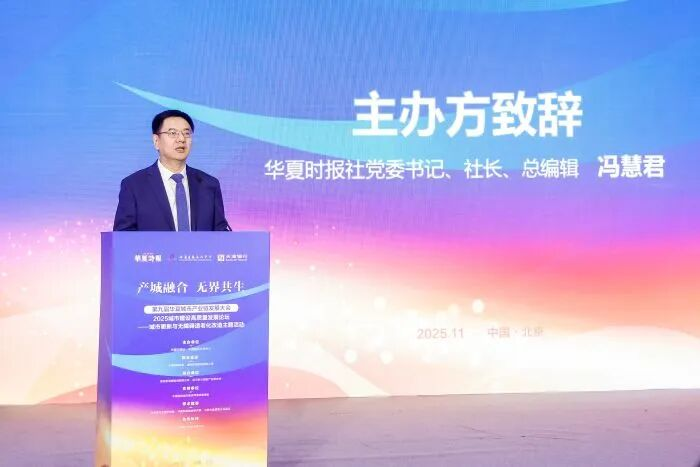
Mr. Feng Huijun, Party Committee Secretary, Publisher, and Editor-in-Chief of China Times, delivered the opening address. He noted that the core of a city is its people, and the essence of high-quality urban development is to ensure that the fruits of development benefit everyone. The fundamental shift in urban development logic from "scale expansion" to "improving existing stock" aligns closely with the requirements of the Fourth Plenary Session of the 20th Central Committee of the Party, which emphasizes "optimizing regional economic layouts and promoting coordinated regional development." Building a "warm, vibrant, and sustainable" urban organism has become an important mission entrusted to us by the new era. The theme of this conference, "Boundless Symbiosis through Industry-City Integration," is a precise response to this call of the times and a vivid illustration of the Plenary Session’s goal to "build a regional economic layout that features complementary strengths and high-quality development."
Mr. Shang Shaoyan, Party Committee Secretary and Director of the China Architectural Culture Center, stated that the entire nation is currently deepening its study and implementation of the guiding principles of the Central Urban Work Conference. The conference clearly outlined the path for urban development in the new era: building modern, people centered cities that are innovative, livable, beautiful, resilient, cultivated, and smart. Barrier free environment construction and aging adapted renovation are not only vital livelihood projects that embody the principle of “Cities are built by the people and for the people,” but also key measures to implement the “Law of the People’s Republic of China on Barrier Free Environment Construction” and promote high quality urban development. Moreover, they form a core part of creating “good houses, good neighborhoods, good communities, and good urban districts.”
4. Keynote Speech: Deepening Consulting for Innovation, Empowering Development through Service
Huang Zhiting, Chairman of Jianjing Consulting, delivered a keynote speech entitled "Exploring a New Path for Whole-Process Consulting in Barrier-Free Environment Construction with Value Creation as the Core." Combining corporate practice and industry insights, he systematically elaborated on Jianjing Consulting's thinking and actions in the field of barrier-free environment construction from three dimensions: international and domestic development history, corporate exploration and practice, and industry countermeasures and suggestions, providing the "Jianjing Solution" for the standardization and sustainable development of the industry.
(1) International and Domestic Development History, Advancing with Honor in the Civilization Process
Barrier-free environment construction is an important symbol of social civilization and progress, carrying the common pursuit of inclusive and universal development for all mankind. From the formation of international consensus to the deepening of domestic practice, the development of the barrier-free cause has always been in sync with the mission of the times and resonated with the needs of people's livelihood.
① International Development Context: Conventions Leading the Way, Global Promotion
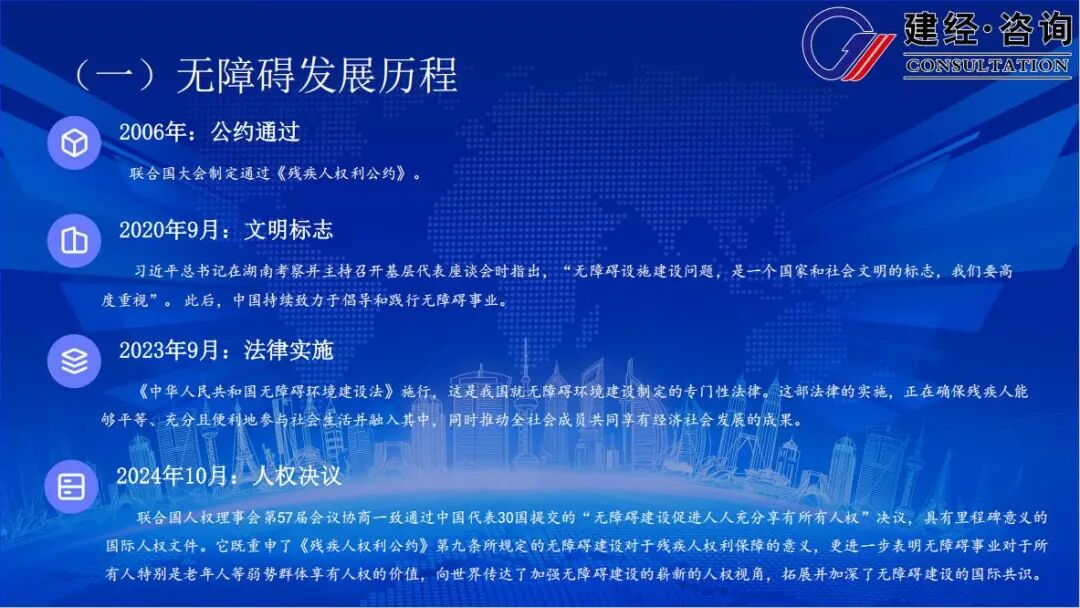
In 2006, the United Nations General Assembly adopted the Convention on the Rights of Persons with Disabilities, laying the international legal foundation for the construction of a barrier-free environment worldwide and clarifying the core responsibility of all countries to ensure the equal participation of persons with disabilities in social life. In October 2024, the 57th session of the UN Human Rights Council unanimously adopted a resolution submitted by China on behalf of 30 countries, entitled "Accessibility for All to Fully Enjoy All Human Rights." This landmark document broadened the human rights perspective on accessibility and deepened the international consensus that accessibility benefits all people.
In 2025, China continued its efforts in the international field of accessibility: in June, it hosted the exhibition "Accessibility for All: Building an Inclusive Future" in Geneva, sharing China's practical achievements; in July, it delivered a joint statement on "Artificial Intelligence for Accessibility" on behalf of more than 70 countries, proposing three major principles: "people-centered, inclusive, and win-win cooperation"; and in September, it hosted the Dialogue on Accessibility for All, commemorating the fifth anniversary of President Xi's speech on accessibility, bringing together representatives from many countries and international organizations to discuss the grand plan for accessibility development, generating broad international resonance. Through a series of international actions, China promoted the coordinated development of global accessibility, demonstrating its responsibility as a major power.
② Domestic Development Process: Policy Support and Deepening Practice
In September 2020, President Xi pointed out that "the construction of barrier-free facilities is a symbol of national and social civilization," elevating the cause of barrier-free access to a matter of paramount importance concerning people's well-being. In September 2023, the "Law of the People's Republic of China on the Construction of Barrier-Free Environments" officially came into effect, comprehensively regulating aspects such as facility construction, information exchange, and social services, marking a new stage of legalization and standardization in my country's barrier-free construction. In September 2025, the Supreme People's Procuratorate, together with the Ministry of Civil Affairs and the China Disabled Persons' Federation, jointly released six typical cases of public interest litigation related to barrier-free access, covering three major areas: facility construction, information exchange, and social services, using these cases to explain the law and promote its effective implementation.
Over the past five years, the concept of barrier-free access has been deeply integrated into national economic development planning, national standards of the Ministry of Housing and Urban-Rural Development, the travel system of the Ministry of Transport, and the field of public interest litigation of the Supreme People's Procuratorate. It has also been included in the quality certification scope of the State Administration for Quality Supervision, Inspection and Quarantine, steadily advancing alongside the goal of high-quality development. To date, nearly 30 ministries and commissions have clearly defined specific measures to support the construction of barrier-free environments, and social consensus has continued to strengthen, laying a solid institutional and practical foundation for the high-quality development of barrier-free environment construction during the 15th Five-Year Plan period.
(2) Enterprise Exploration and Practice: Empowering Industry Development through Professionalism
As a leading enterprise in the engineering consulting sector, Jianjing Consulting has always remained committed to its mission of "Contributing to Projects, Benefiting Society" and closely follows national strategic directives. The company has dedicated significant effort to the field of accessibility consulting, developing a professional, full-chain service model through systematic framework building, practical innovation, and international cooperation.
① Enterprise Foundation: Robust Qualifications and Comprehensive Presence
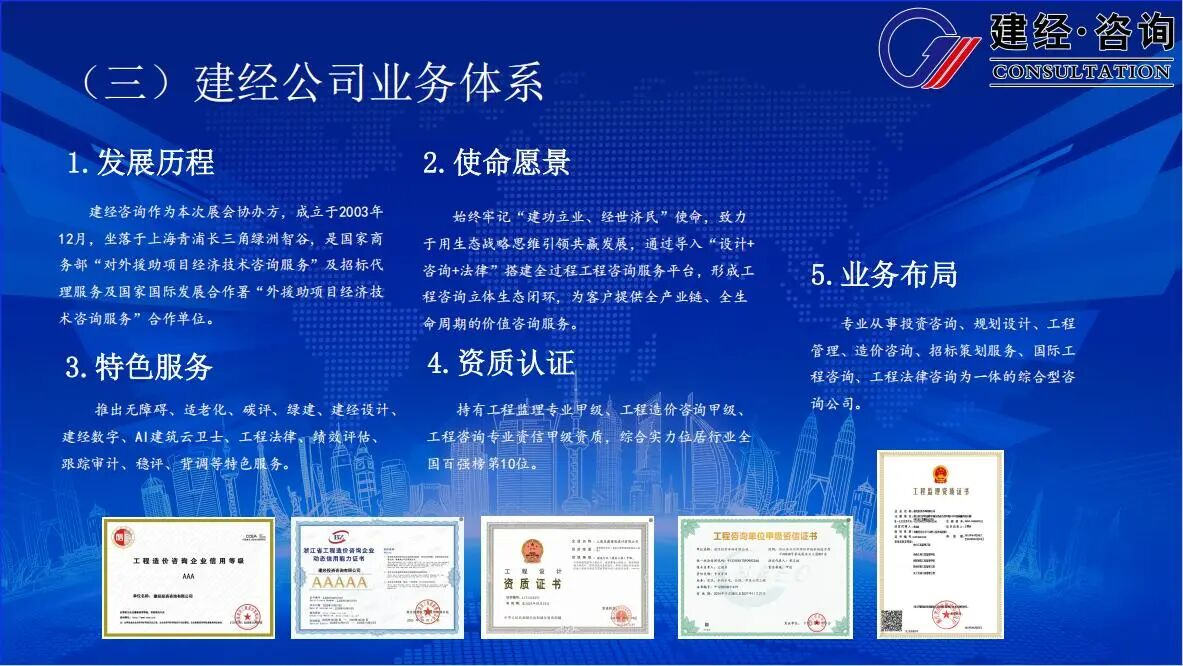
Founded in December 2003 and headquartered at the Yangtze River Delta Oasis Intelligence Valley in Shanghai's Qingpu District, Jianjing Consulting is a key partner of the Ministry of Commerce and the China International Development Cooperation Agency for economic and technical consulting and tender agency in foreign aid projects. The company holds top-tier (Grade-A) qualifications in Engineering Supervision, Engineering Cost Management, and Engineering Consulting, ranking 10th nationally in comprehensive strength within the industry, which underscores its solid professional service foundation.
Its business scope spans investment consulting, planning and design, project management, cost consulting, international engineering consulting, and engineering legal consulting. This forms an integrated, full-process engineering consulting service platform characterized by "Design + Consulting + Legal," creating a comprehensive ecological loop. Leveraging its full-industry-chain advantage, the company offers specialized services including accessibility and aging-adapted consulting, carbon assessment, green building, Jianjing Digital, and AI Building Cloud Guardian. These provide comprehensive support for its accessibility consulting business, meeting clients' full lifecycle value needs.
② Accessibility Business Development: Focused Execution and Integrated Systems
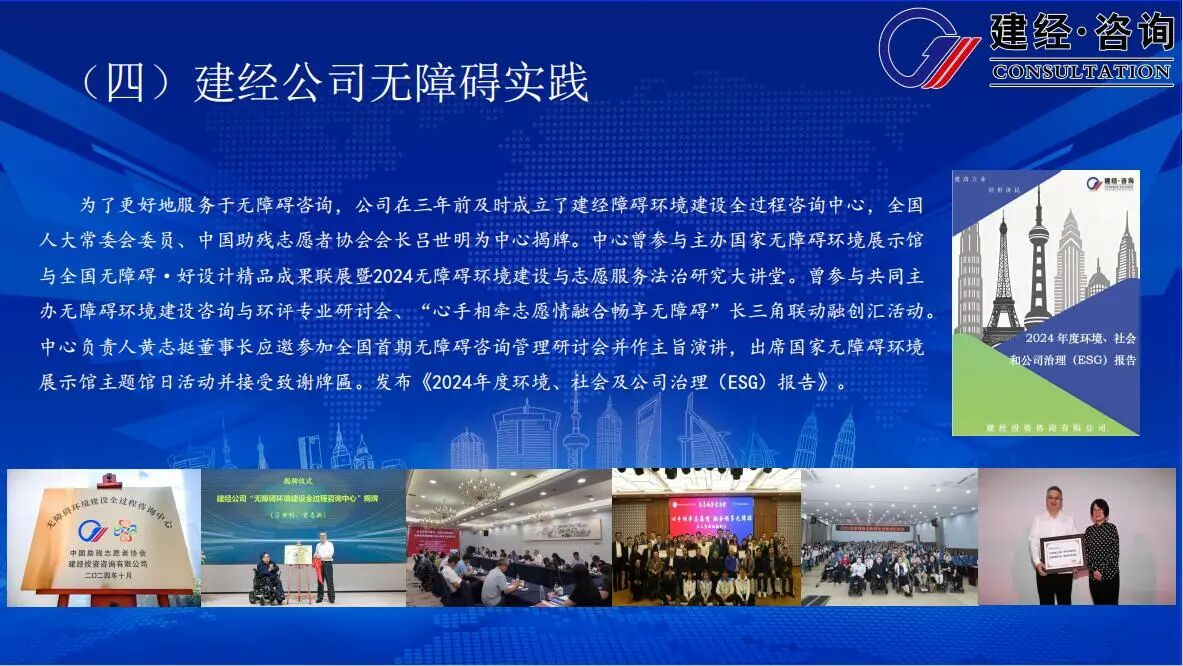
Three years ago, Jianjing Consulting established the Full-Process Consultation Center for Barrier-Free Environment Construction. The center was inaugurated by Mr. Lü Shiming, a member of the Standing Committee of the National People's Congress and President of the China Association of Volunteers for Persons with Disabilities, marking the company’s entry into a specialized and systematic phase of development in accessibility consulting.
As a member of the China Accessibility Think Tank, the center actively participates in strategic planning for accessibility, national-level research projects, and standard formulation. It actively explores an integrated consultation model centered on "systematic planning and coordinated implementation."
The center has achieved significant results in practice, including involvement in key projects such as:
l The barrier-free and aging-adapted renovation design for Phase II of Shanghai Qingpu Bailian Outlets.
l Full-process consulting for aging-adapted improvements at the Fangting Water Courtyard in the Yangtze River Delta Eco-Green Integrated Development Demonstration Zone.
l Accessibility system design for the Rutong-Suhu Intercity Railway.
The center also played a key role in drafting and releasing the national standard GB/T 46392-2025 "Evaluation Criteria for Barrier-Free Environment Construction at the County Level" and compiled the "Zhejiang Provincial Guidelines for Monetary Subsidy Programs for Barrier-Free Home Modifications and ‘Clean & Bright Living’ Initiatives for Low-Income Families with Disabilities," filling gaps in industry standards.
Furthermore, the center organized events such as the joint exhibition at the National Barrier-Free Environment Exhibition Hall and the Yangtze River Delta Accessibility Integration and Innovation Forum. Mr. Huang Zhiting, Chairman of the Board, was invited to deliver a keynote speech at the inaugural National Seminar on Accessibility Consulting Management, demonstrating the company's professional influence in the field.
③ Core Service System: Full-Chain Coverage, Value-Driven Approach
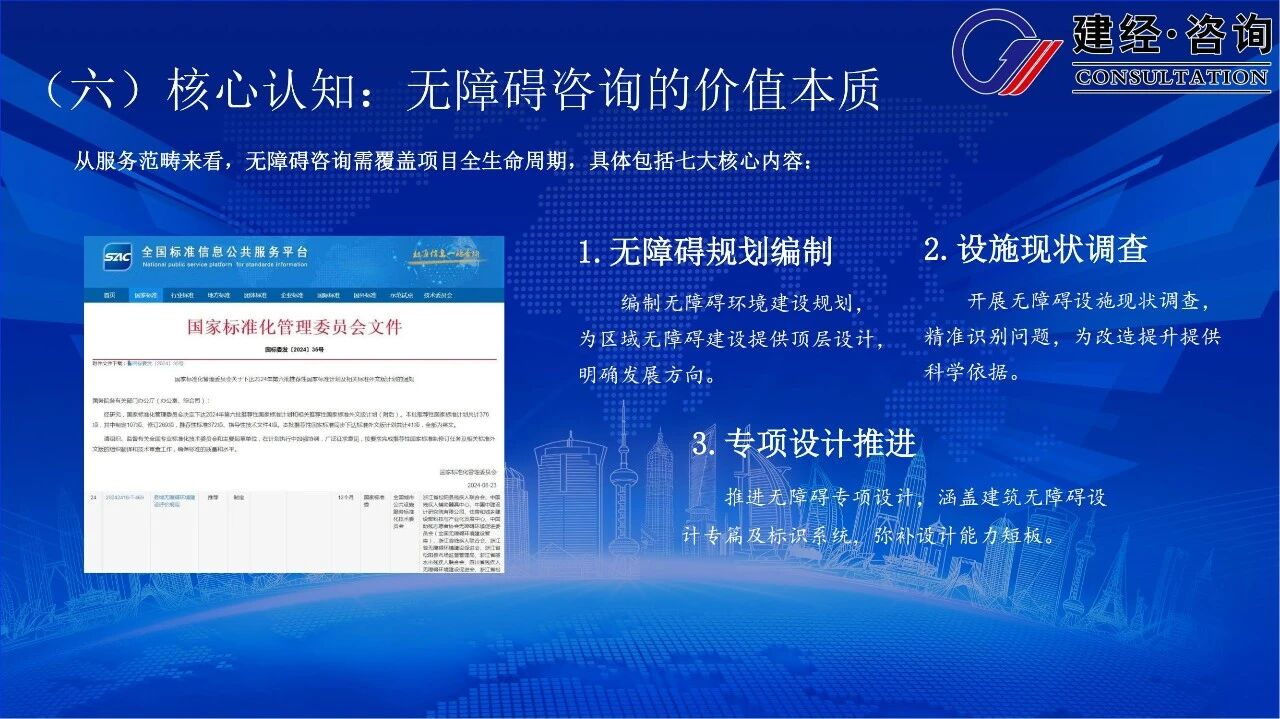
Recognizing the "systems engineering" nature of barrier-free construction, Jianjing Consulting has established seven core service systems that cover the entire project lifecycle. These systems are centered on creating social value while balancing compliance and practicality:
First, Barrier-Free Planning Formulation. Provides regional top-level design to ensure local construction aligns with overall urban master plans.
Second, Facility Condition Assessment. Accurately identifies shortcomings to provide a scientific basis for renovation and improvement.
Third, Specialized Design Support. Covers dedicated accessibility design sections and signage systems, addressing gaps in design institutes' specialized capabilities.
Fourth, Solution Review Mechanism. Conducts early-stage intervention and review to prevent design flaws.
Fifth, Standard and Guideline Development. Drafts local and group standards to improve the industry framework.
Sixth, Post-Completion Evaluation. Quantifies the effectiveness of renovations to optimize resource allocation.
Seventh, User Satisfaction Surveys. Employs independent third-party mechanisms to ensure objective and fair assessment results.
These seven interconnected services form a complete "planning-design-review-implementation-evaluation" closed loop. This approach fundamentally moves away from formalism that prioritizes standards over usability, ensuring that every service is genuinely tailored to the practical needs of groups such as persons with disabilities and the elderly.
④ Professional Team Building: Multidisciplinary Integration, Human-Centric Foundation
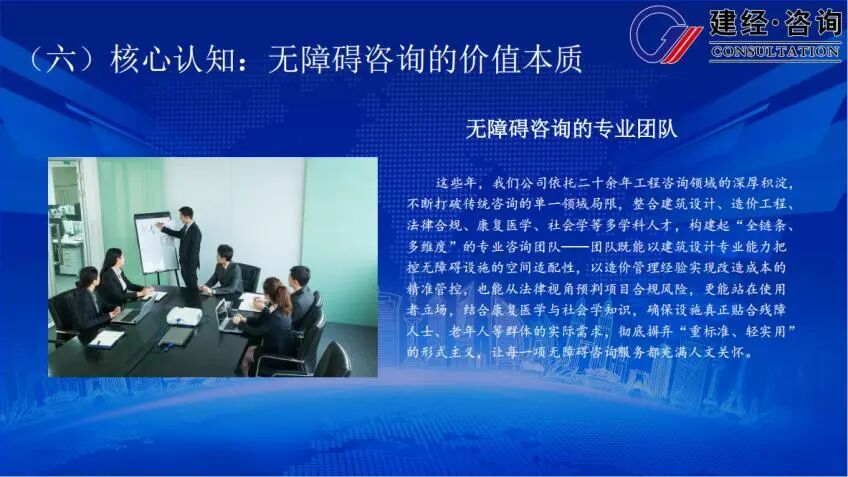
Leveraging over two decades of deep expertise in the engineering consulting field, Jianjing Consulting breaks through the limitations of traditional single-domain consulting. By integrating talent across architecture design, cost engineering, legal compliance, rehabilitation medicine, sociology, and other disciplines, we have assembled a "full-chain, multi-dimensional" professional team.
The team's distinct strengths include:
l Architectural Design Expertise to ensure spatial compatibility and functionality of facilities.
l Cost Management Experience to achieve precise budget control and value optimization.
l Legal and Compliance Insight to proactively identify and mitigate regulatory risks.
l Rehabilitation Medicine and Sociology Knowledge to refine solutions from the end-user’s perspective, ensuring that every facility meets compliance standards while remaining practical and human-centered.
⑤ International Exchange and Cooperation: Global Vision, Shared Experience
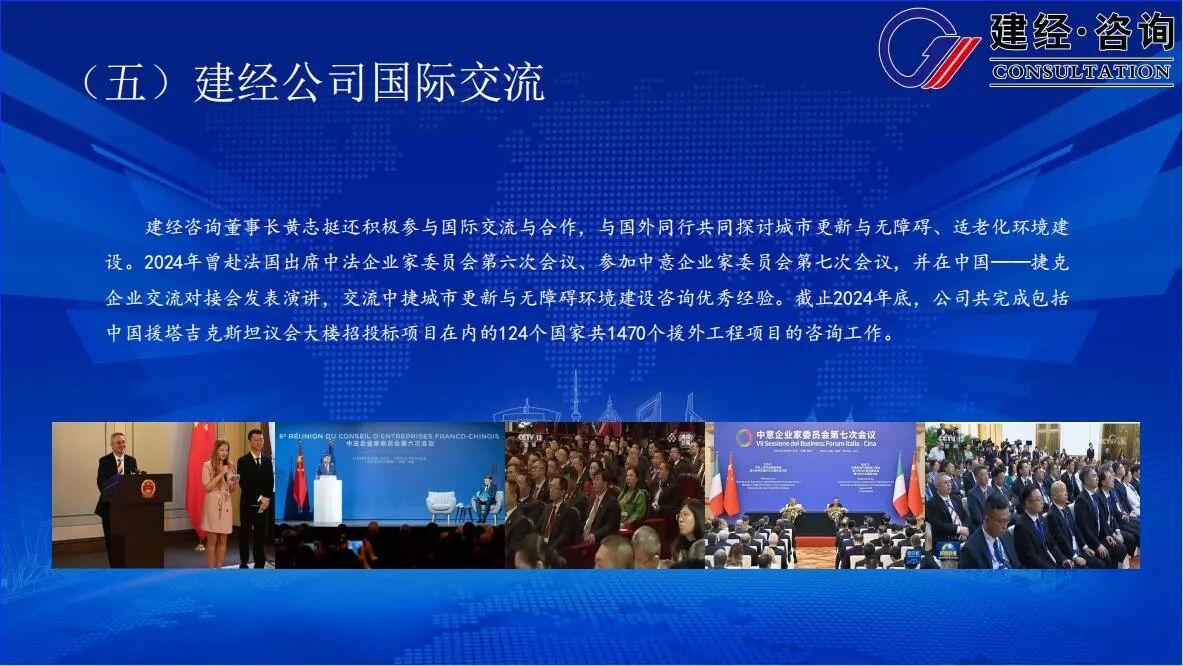
Jianjing Consulting adheres to an international development strategy and actively engages in global exchange and collaboration. In 2024, Chairman Huang Zhiting attended the 6th France-China Entrepreneurs Committee Meeting in France, participated in the 7th Italy-China Entrepreneurs Committee Meeting, and delivered a speech at the Czechia-China Business Exchange and Matchmaking Conference, sharing insights and exemplary practices in urban renewal and accessibility consulting between China and Czechia.
By the end of 2024, the company had completed consulting services for 1,470 foreign aid projects across 124 countries, including procurement and bidding for projects such as the China-Aided Tajikistan Parliament Building. This extensive international engagement not only exports China's expertise in accessibility consulting but also facilitates the absorption of advanced international concepts and technologies, creating a two-way empowerment of "bringing in" and "going out."
⑥ Market Promotion and Innovation: Empowering Value and Resolving Core Challenges
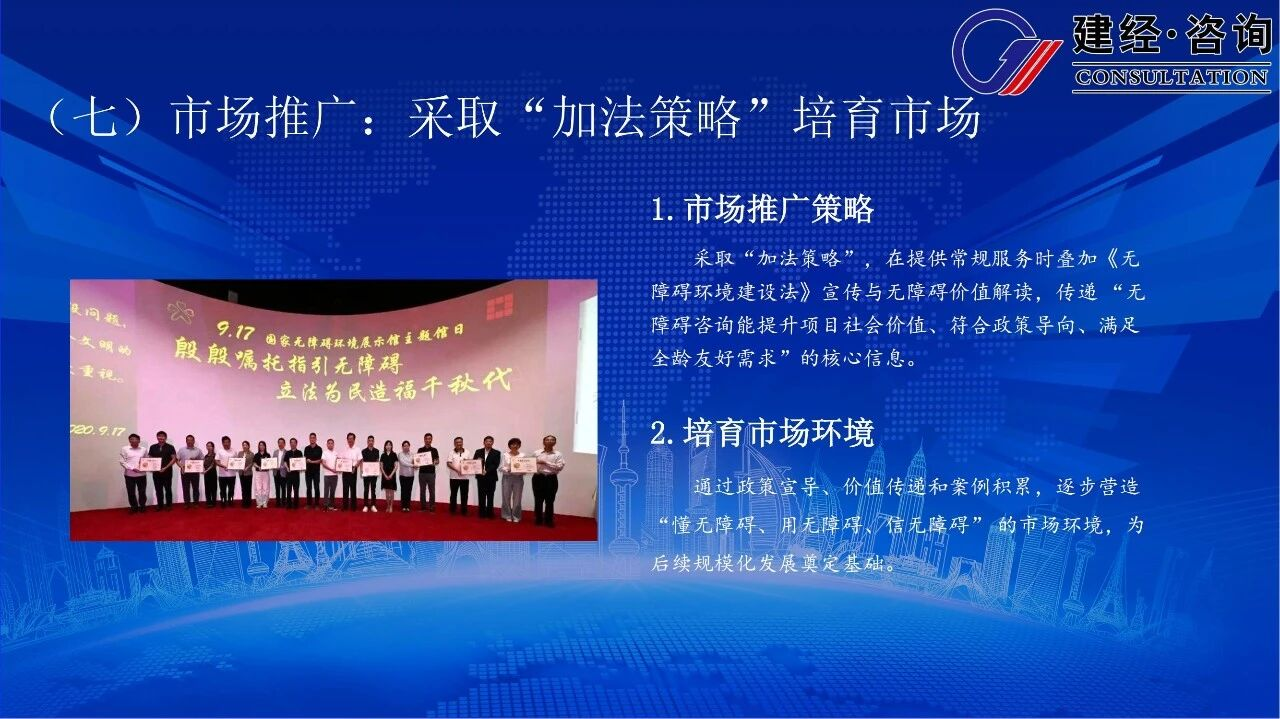
Market Promotion: The "Add-on" Strategy
In market outreach, Jianjing adopts an "add-on" strategy, integrating advocacy and value communication of the "Barrier-Free Environment Construction Law" into conventional services. This reinforces a core message: accessibility consulting enhances a project's social value, aligns with policy directions, and meets the needs of an all-ages-friendly society. The aim is to cultivate a market environment where stakeholders understand, utilize, and trust accessibility as an integral value driver.
Innovation Path: Addressing Industry Contradictions
On the innovation front, the company directly tackles two central industry contradictions:
Balancing Standardization and Personalization through a "Base Standards + Tailored Solutions" model. This ensures compliance with universal norms while developing customized solutions for diverse user groups such as persons with disabilities, the elderly, and children.
Driving progress via "Integration + Deep Expertise," combining multidisciplinary resources with specialized, in-depth knowledge. This approach tackles industry pain points such as "prioritizing form over function" and "fragmented efforts over systematic solutions."
A parallel "Layered Management, Phased Advancement" strategy is employed, offering differentiated consulting services tailored to the specific foundations of different cities. This is supported by dedicated teams committed to fulfilling corporate social responsibility in practice.
⑦ ESG Integration in Practice: Responsibility-Driven, Value Co-Creation
Jianjing Consulting deeply integrates accessibility consulting with the principles of ESG (Environmental, Social, and Governance), as detailed in its published "2024 Environmental, Social, and Governance (ESG) Report."
On the Social Front: Our professional consulting services empower persons with disabilities and other specific groups to participate equally in social life, safeguard their legitimate rights and interests, and promote inclusive societal development.
On the Governance Front: We incorporate accessibility principles into corporate decision-making processes, establishing robust service standards and quality control systems. This ensures the simultaneous enhancement of service quality and social value, providing a replicable model for ESG implementation within the industry.
(3) Industry Recommendations and Strategic Outlook
Currently, the accessibility consulting industry faces both significant opportunities and challenges. While the in-depth implementation of the Barrier-Free Environment Construction Law and the advancement of the 15th Five-Year Plan strategy usher in a golden period for growth, the industry still grapples with practical issues such as an incomplete professional system and the under-realized value of consulting services. Based on practical experience, Chairman Huang Zhiting has proposed targeted recommendations to promote the standardization and sustainable development of the sector.
① Current Industry Status: Strengths and Shortcomings Coexist
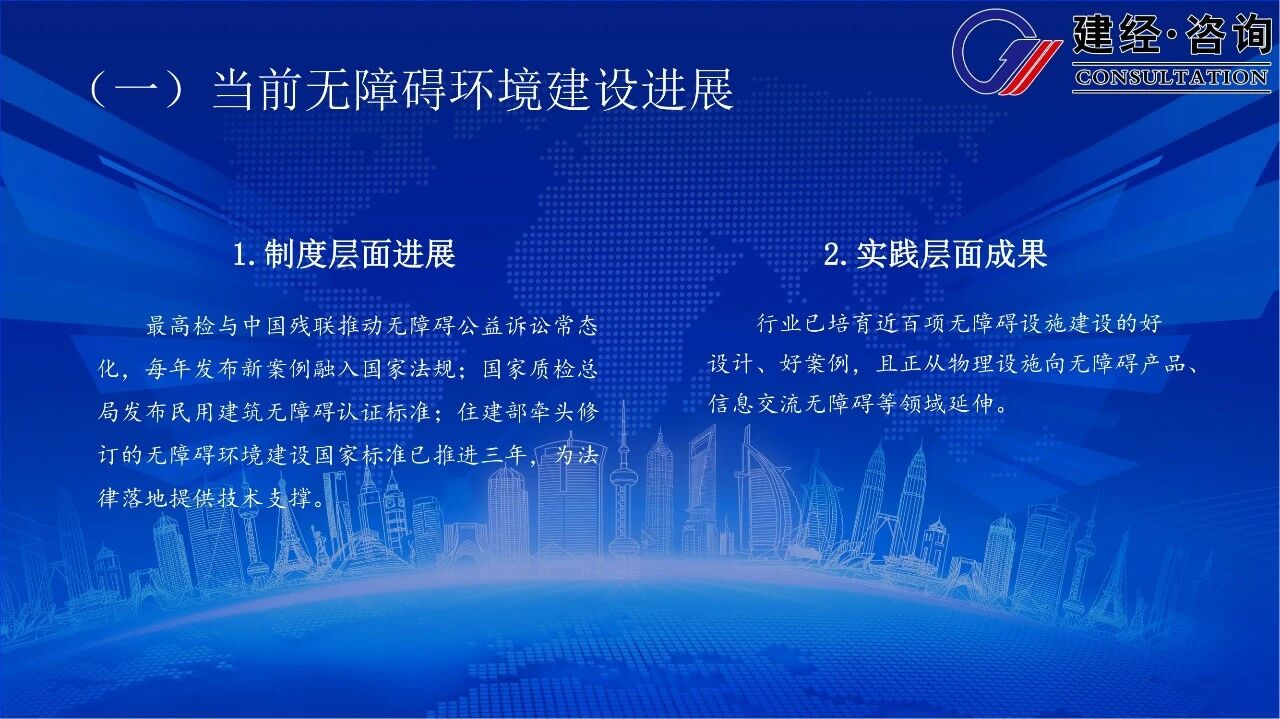
At the institutional level, steady progress includes the normalization of public interest litigation related to accessibility, the release of certification standards for accessible civil buildings, and the three-year revision of national accessibility standards led by the Ministry of Housing and Urban-Rural Development, providing robust technical support for legal implementation.
At the practical level, the industry has cultivated nearly a hundred exemplary cases. The scope of development has expanded from physical facilities to include accessible products, information exchange, and more, forming a diversified landscape.
However, significant shortcomings persist:
l Incomplete Professional System: There is a lack of unified industry standards, training materials, and corresponding professional roles, leading to inconsistent service quality.
l Unrecognized Consulting Value: Consulting services are often conducted sporadically and voluntarily, failing to evolve into a structured, credentialed, and standardized development model.
l Insufficient Talent Pool: A shortage of composite talents skilled in "design + technology + management" hampers comprehensive service delivery.
l Poor Standard Coordination: Product standards are disconnected from construction standards, resulting in some facilities being "unusable upon completion."
② Building Industry Consensus: A Three-Dimensional Support Framework
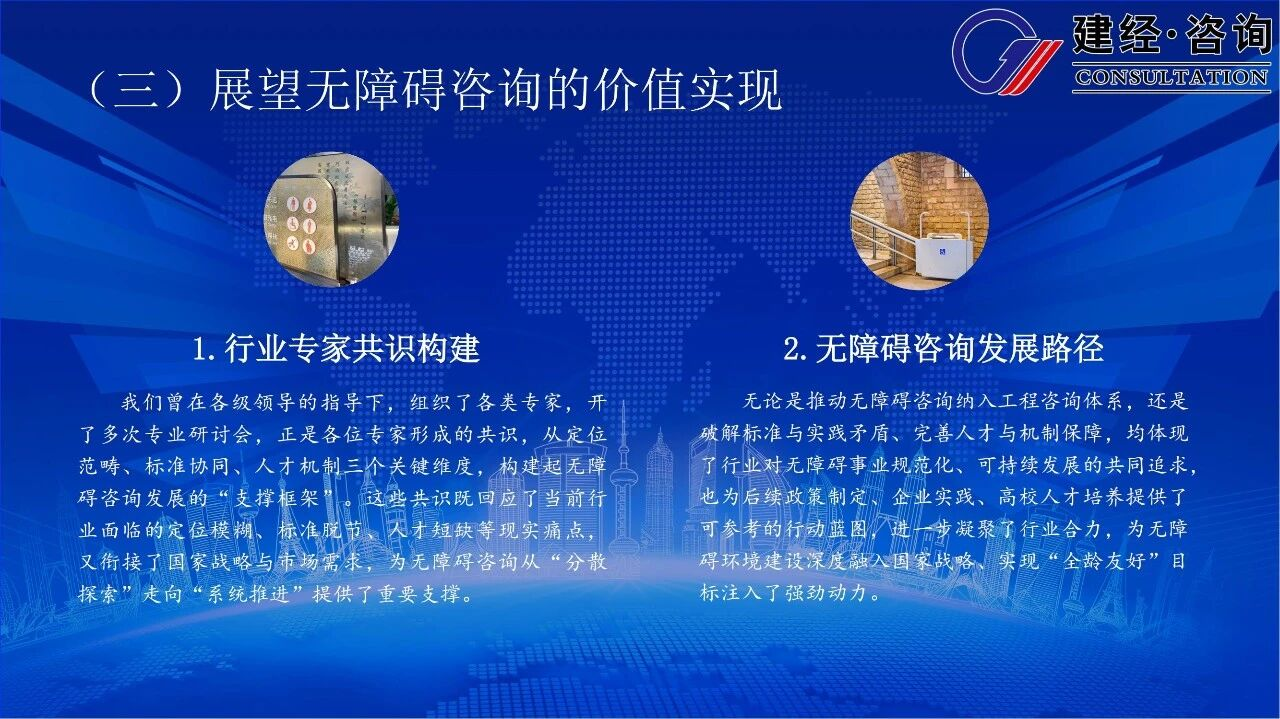
Jianjing Consulting has organized multiple seminars with industry experts, leading to key consensus on constructing a "support framework" for the development of accessibility consulting:
1) Definition and Scope: It is established that accessibility consulting constitutes a specialized branch of engineering consulting. This clarity lays the policy groundwork for the future professional certification of "Accessibility Consultants."
2) Standard Coordination: Efforts are focused on bridging standards across multiple disciplines, unifying the technical parameters and acceptance criteria for both products and construction. This directly addresses the issue of "disconnected standards."
3) Talent Development Mechanism: A comprehensive "training-evaluation-practice" system is advocated. This includes promoting the establishment of related university majors and conducting vocational skill training programs.
These three consensus points directly respond to industry pain points, align national strategy with market demand, and are pivotal in shifting the sector from "fragmented exploration" to "systematic advancement."
③ Innovative Mechanism Strategies: Strengthening Safeguards to Foster Vitality
Three key strategies are proposed to strengthen institutional support and energize the industry:
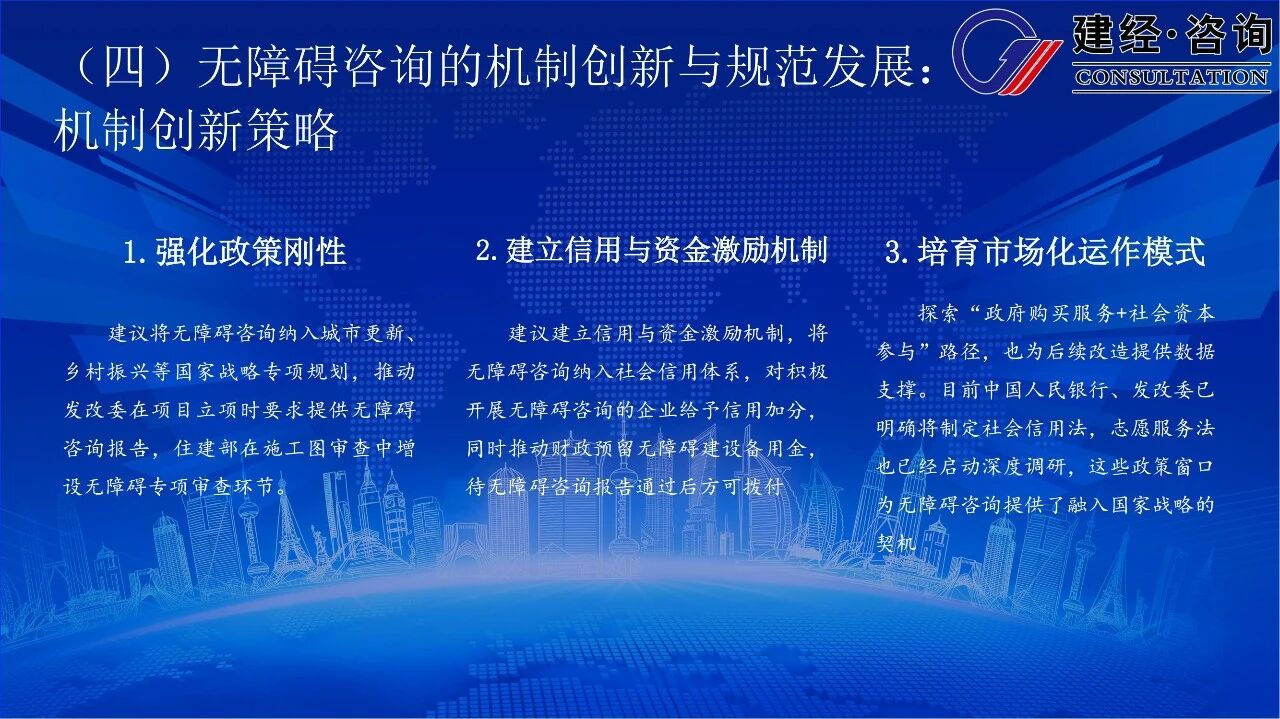
1) Strengthen Policy Enforcement
a. Integrate accessibility consulting into national strategic frameworks such as urban renewal and rural revitalization.
b. Require the submission of an accessibility consulting report as a prerequisite for project approval.
c. Mandate a dedicated accessibility review during the construction drawing examination process.
2) Establish Incentive Mechanisms
a. Include accessibility consulting engagement within the social credit system, granting credit score bonuses to actively participating enterprises.
b. Advocate for the pre-allocation of budgetary contingency funds in public projects, with disbursement conditional upon approval of the accessibility consulting report.
3) Cultivate Sustainable Market Models
a. Explore pathways combining "Government-Purchased Services + Social Capital Participation.
b. Leverage legislative opportunities, such as the formulation of a Social Credit Law and a Volunteer Service Law, to embed consulting services more deeply into the national strategic fabric.
④ Standardized Development Measures: A Multi-Pronged Approach to Enhance Quality
Three targeted measures are proposed to standardize industry development and improve service quality:
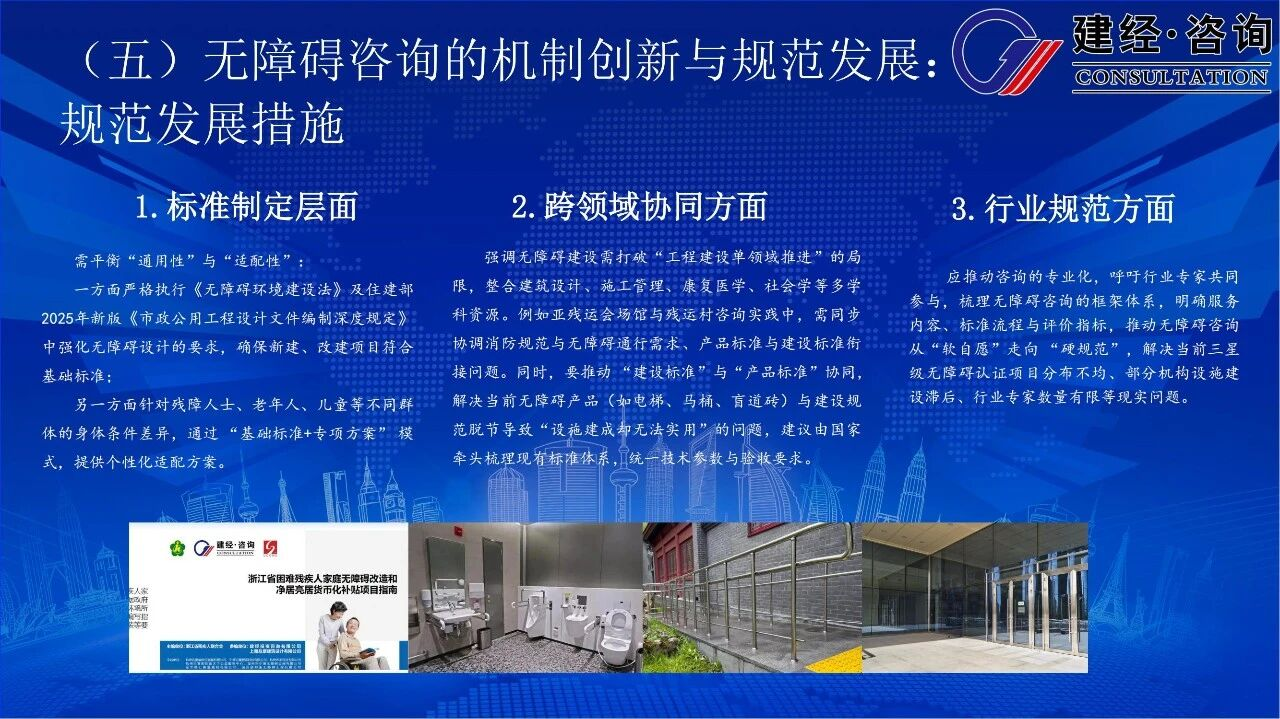
1) Refining Standards Formulation:
Balance "universality" and "adaptability" by rigorously implementing the legal framework and updated design codes. Employ a "base standards + tailored solutions" model to meet the diverse needs of different user groups.
2) Promoting Cross-Disciplinary Coordination:
Integrate multi-disciplinary resources to reconcile conflicts, such as aligning fire safety codes with accessibility requirements and ensuring product standards are compatible with construction specifications. Models from projects like the accessibility consulting for the Asian Para Games venues can serve as valuable references.
3) Establishing Industry Norms:
Systematize the consulting framework by clearly defining service scopes, processes, and evaluation metrics. This is essential for transitioning the sector from operating on a "soft, voluntary" basis to adhering to "hard, mandatory" norms, thereby addressing issues like uneven distribution of certified projects and a shortage of qualified experts.
⑤ Professional Talent Development: Building Systems to Strengthen the Foundation
Talent is the core pillar of the industry and must be integrated into the national development agenda.
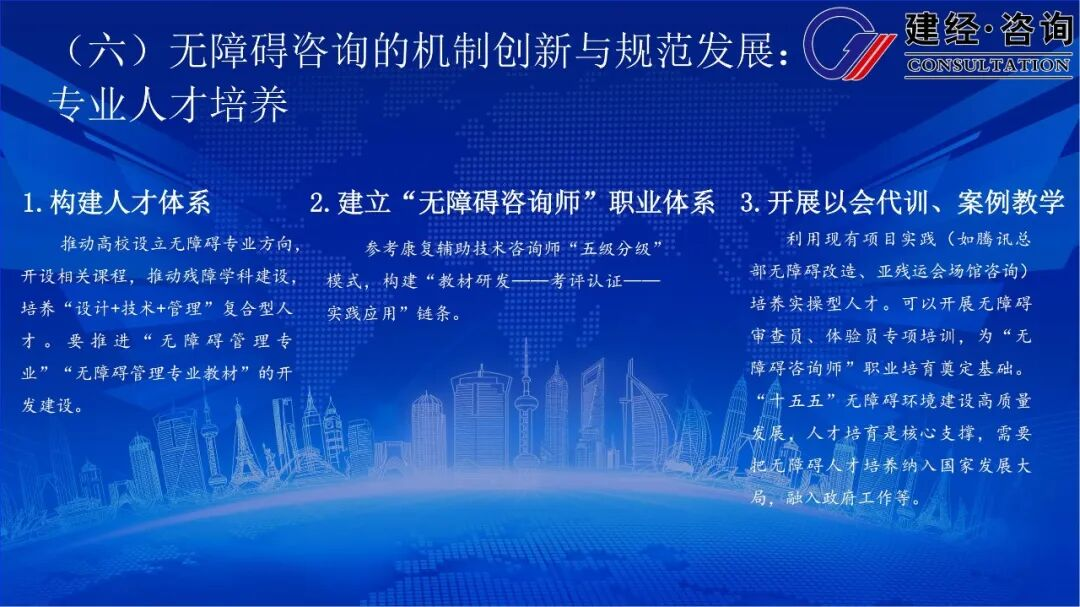
1) Establishing an Education System
Promote the introduction of accessibility-focused academic tracks in universities, develop specialized programs such as "Accessibility Management," and create corresponding teaching materials to cultivate interdisciplinary talent.
2) Creating a Professional Career Path
Modeled on the "Five-Level Grading" system used for rehabilitation assistive technology consultants, build a comprehensive pathway encompassing "textbook development – qualification assessment and certification – practical application."
3) Implementing Diverse Training Programs
Utilize real-world projects such as the renovation of Tencent Headquarters and accessibility consulting for the Asian Para Games venues for case-based teaching. Train personnel like accessibility inspectors and user-experience evaluators to build a robust talent pipeline.
⑥ Future Outlook: Integrating into National Strategy for Shared Development
Looking ahead, accessibility consulting will be deeply integrated into national strategies, expanding its service scope from key sectors to encompass all aspects of urban construction and social services.
Technologically, deep integration with artificial intelligence and big data—leveraging tools like the AI Building Cloud Guardian—will significantly enhance design evaluation efficiency.
In service models, full-process, end-to-end consulting will become mainstream, delivering comprehensive, integrated solutions.
Jianjing Consulting will continue to drive progress in standard setting, technological innovation, and service enhancement, actively promoting the systematic professionalization of the Accessibility Consultant role. We look forward to collaborating with industry peers to realize a social vision of "All-Ages Friendly and Inclusive Prosperity," ensuring that every individual can equally and with dignity share in the nation's developmental achievements. Together, we can make the "warmth of accessibility" illuminate the path of societal progress and contribute to the Chinese modernization goal of "Barrier-Free Access, Shared Well-Being."
5. Recognition Ceremony: Honor Accolades Set Benchmark, Responsibility Recognition Earned
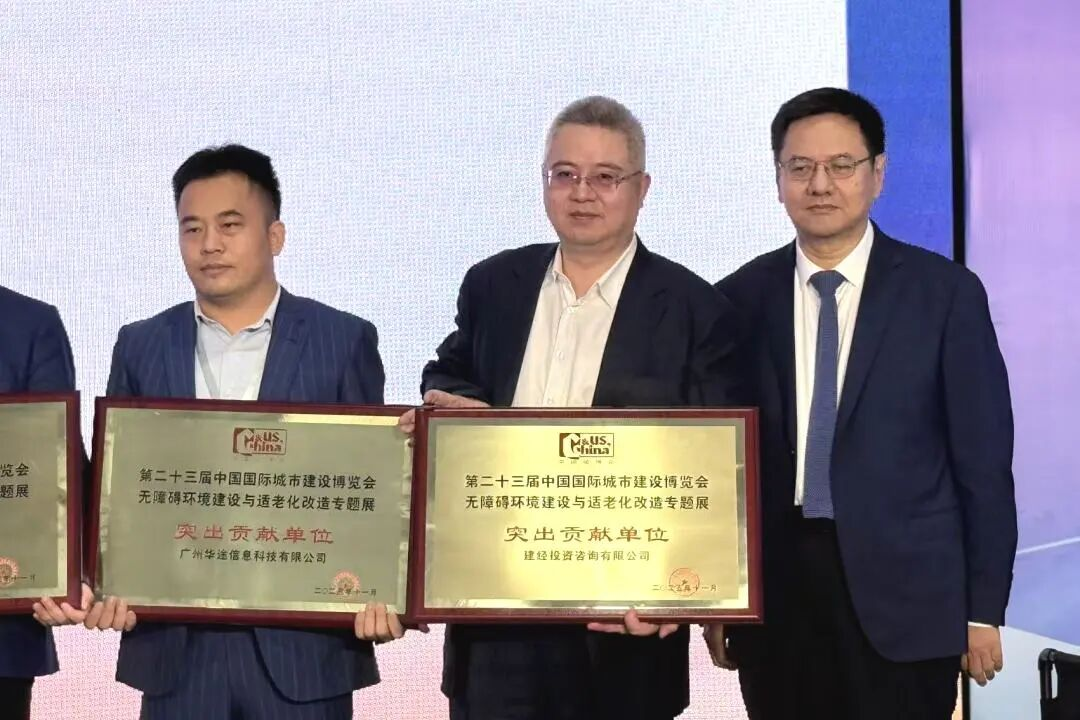
A solemn award ceremony was held at the conference, where Jianjing Consulting was honored with the title of "Outstanding Contributor to the Barrier-Free Environment Construction and Aging-Adapted Renovation Special Exhibition of the 23rd China International Urban Construction Expo (CIUCE)." This recognition was awarded in acknowledgment of the company's significant contributions, professional technical service capabilities, and extensive practical experience in the fields of barrier-free environment development and aging-adapted renovation.
Receiving this honor represents high recognition from both the conference organizing committee and industry experts for Jianjing Consulting's dedicated efforts in accessibility consulting. It also serves as full affirmation of the company's commitment to corporate social responsibility and its role in driving industry advancement. As a co-organizer, Jianjing Consulting actively pooled resources and coordinated stakeholders throughout the event's preparation and execution, providing strong support for the forum's success. In its accessibility consulting practice, the company has delivered high-standard, quality services, creating multiple benchmark projects that serve as professional models for the industry.
Looking ahead, Jianjing Consulting will treasure this honor and hold itself to even higher standards. We are committed to continuously deepening technological innovation and service enhancement in accessibility consulting, steadfastly advancing along the path toward standardized and professional development in barrier-free environment construction. Our goal remains to empower more individuals with specific needs to participate equally in social life and share in the fruits of development.
6. Intellectual Dialogue: Roundtable Forum on Livelihood Issues and Shared Exploration of Long-Term Value
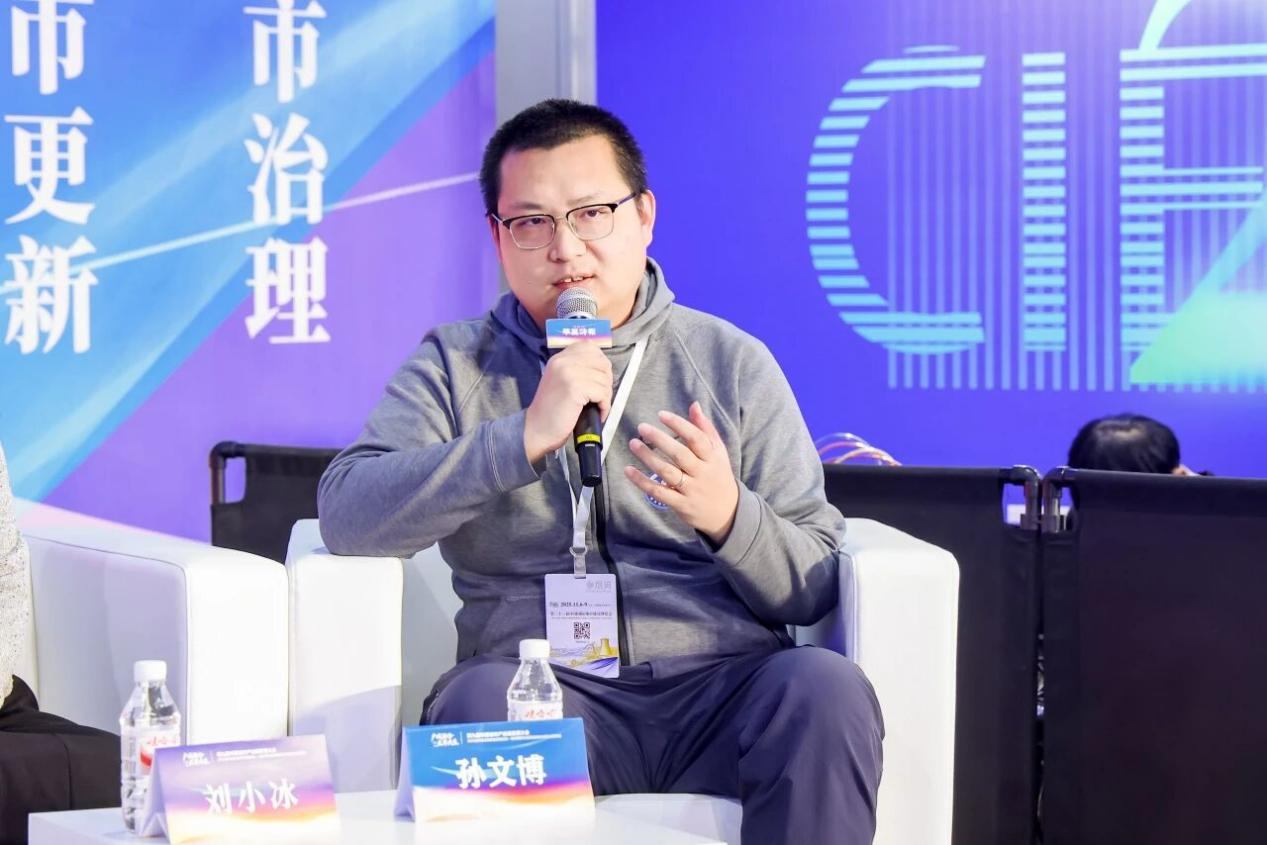
Driven by the "Dual Carbon" goals and industrial upgrading, ESG principles have become a core element of urban industrial competitiveness, sparking transformations across multiple sectors. During the roundtable forum of the Ninth Huaxia Urban Industry Chain Development Conference, distinguished guests from academia and the business community engaged in an in-depth discussion on "Urban Livelihood and Long-Term Value from an ESG Perspective." They shared diverse practical experiences and offered forward-looking recommendations:
l Digital Technology and Aging Adaptation: Adapting digital technologies for aging-friendly renovations to meet the social and psychological needs of the elderly, with a call for government guidance in promoting digital services tailored for seniors.
l Community-Based Care and Business Innovation: Advocating for the creation of barrier-free, "wall-less" senior communities and fostering goodwill-driven business models to reconstruct commercial logic that accommodates an aging society.
l Corporate Responsibility and Legal Frameworks: Emphasizing corporate initiatives in building accessible facilities and caring for employees with disabilities, alongside recommendations to improve the legal and regulatory ecosystem supporting accessibility.
l Technology for Efficiency and Empowerment: Highlighting the role of the digital economy and AI in reducing costs and saving energy, empowering eldercare and accessibility initiatives, and urging increased industry investment in these areas.
l Industrial Value and Technological Breakthroughs: Defining the industrial value of accessibility and aging-adapted work from an industrial perspective, with a clear demand for breakthroughs in related technical bottlenecks.
l Addressing the 'S' in ESG: Analyzing the current status and challenges in the "Social" dimension of ESG, proposing solutions to break down policy and funding barriers and encouraging a societal shift towards long-termism, thereby providing diverse solutions for high-quality urban development.
Having evolved over eight editions, the Huaxia Urban Industry Chain Development Conference has established itself as a highly authoritative and influential platform for professional idea exchange in the urban development sector. This year’s conference featured an upgraded roster of speakers, bringing together more government officials, industry leaders, and authoritative scholars to deliver a high-caliber intellectual feast. It also showcased the "2025 Outstanding Urban Industry Chain Cases," which span key areas including accessibility, quality housing, and zero-carbon parks. Comprising eight categories such as "2025 Cases Empowering Better Living" and "2025 Green and Low-Carbon Cases," the showcase covers multiple industries like real estate, home furnishings, eldercare, and technology. This comprehensive presentation highlights the new achievements, technologies, and breakthroughs emerging from China's ongoing transformation in urban development.

We will contact you within 24 hours.

 EN
EN